
French Polish for Guitars
French polish is a method of applying shellac by hand — worked onto the wood with a cloth pad, one very thin layer at a time. It has a long history of use on acoustic instruments, and it remains a practical finish for a handbuilt acoustic guitar.
What French Polish Is
Shellac is a natural resin, and French polish is the traditional way of applying it to an instrument: by hand, with a cloth pad, building the finish in many very thin applications. Each pass leaves behind very little material, and the finish grows slowly toward the final surface.
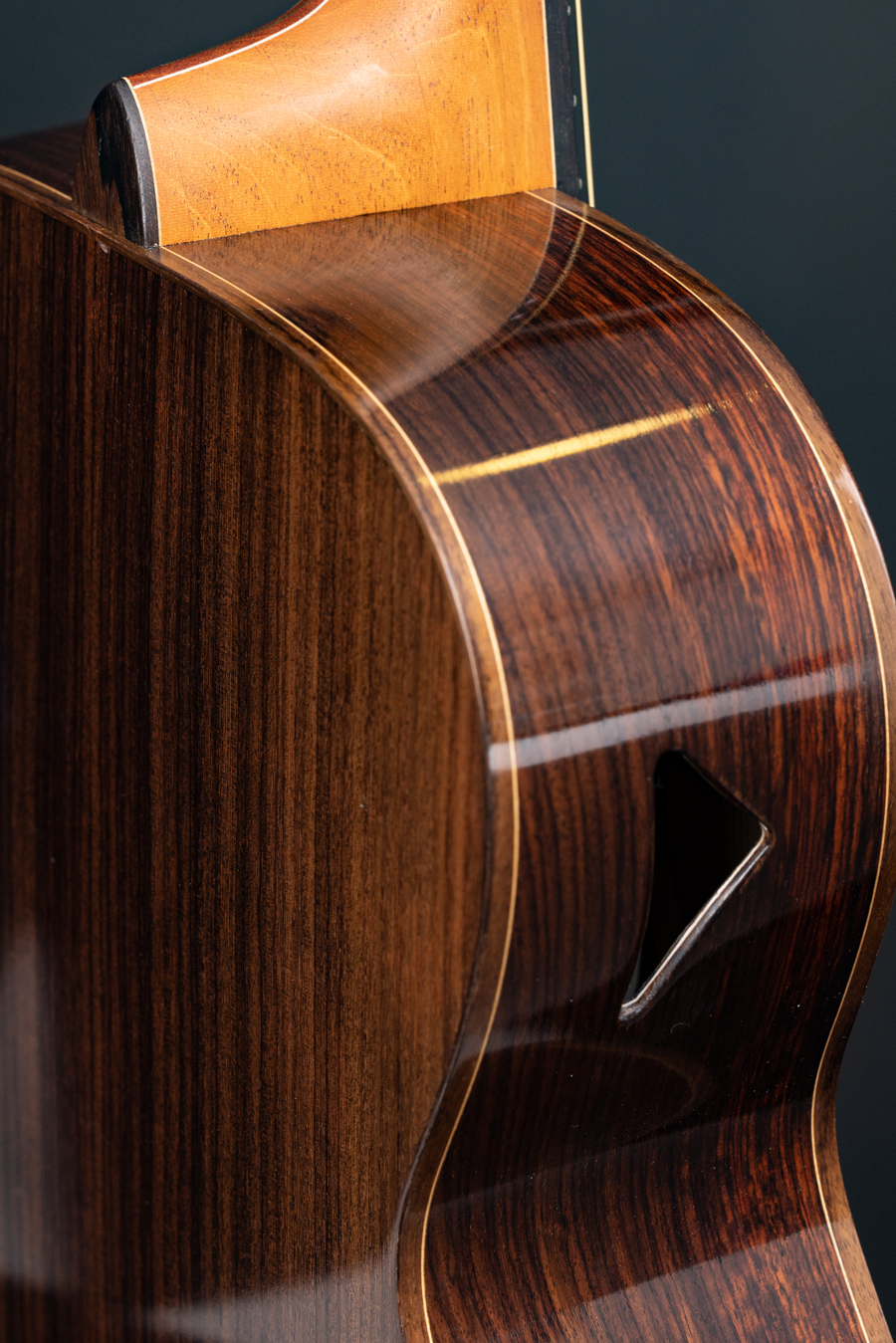
Done well, the result is a hand-rubbed finish that follows the figure of the wood rather than sitting on top of it. It can be brought up to a full gloss or left matte; on my custom builds it's offered both ways.
Why Finish Thickness Matters
An acoustic guitar's soundboard needs to vibrate freely. Finish adds mass to the soundboard, and unnecessary finish mass can restrict its movement and damp some of the response the guitar was built to produce.
That is the practical case for French polish: it can be applied extremely thinly, which lets it protect the instrument while adding very little finish mass.
It's Not "French Polish Good, Poly Bad"
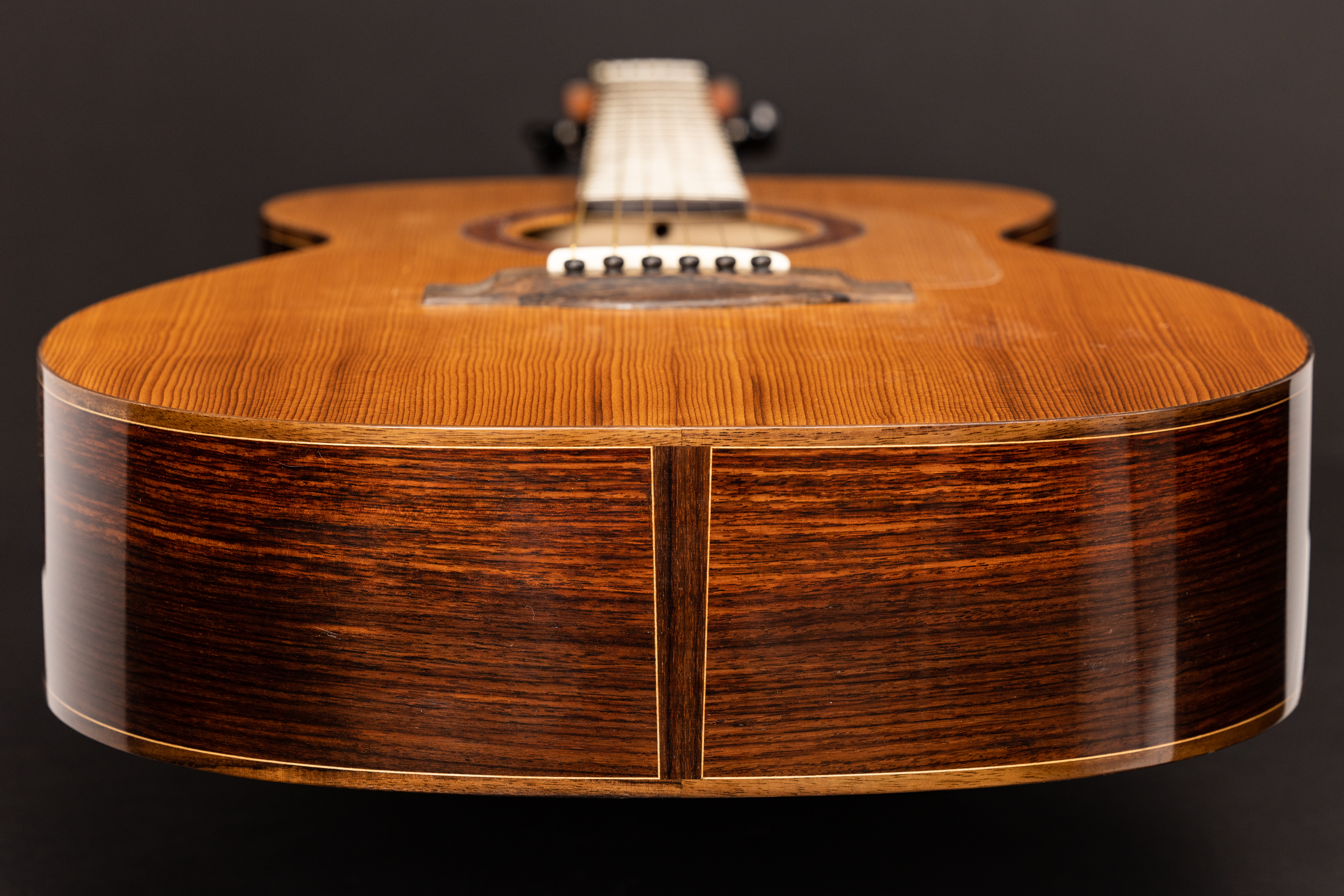
First, the heading: that's what I'm not saying. A modern high-solids finish does not inherently have to be heavy. A skilled guitar finisher can deliberately control the final film thickness — how much material goes on, and how it is leveled, wet sanded, and buffed — so that the desired final thickness remains on the instrument.
With a high-solids finish it's not hard to make something visually impressive: apply a substantial film, sand it flat, and buff it to a high gloss. The more technically demanding part is achieving that same appearance while controlling how much finish ultimately remains on the guitar. That takes real skill, and it has to be exercised on purpose.
That matters because excess finish mass can restrict vibration of the soundboard. The point isn't that one family of finish is good and another is bad. What matters is how much finish ultimately remains on the instrument — and how deliberately that final thickness was controlled.
Tonally Transparent
The way I think about French polish is that it's tonally transparent. French polish doesn't make a guitar sound better simply because it's French polish — the voice comes from the wood, the bracing, the geometry, and the setup. Its advantage is that it can provide the desired finish while adding very little mass.
The finish isn't there to create the tone. The goal is to avoid masking the tone that should already be there — to protect and enhance the instrument while interfering as little as practical with what the wood and structure are already capable of doing.
Advantages and Tradeoffs
French polish asks something of its owner. It is more delicate than a hard modern finish, so it requires a little more care in use. Keep it away from water, alcohol, and excessive heat.
In exchange, it can produce an extremely thin finish with very little added mass, and it ages on the instrument's own terms. Because shellac builds in thin layers, a worn French polish can usually be refreshed by hand rather than stripped and refinished — you are adding back what time took off, not starting over.
For players who want a more durable modern finish, the UV-cured finish I use is hard, thin, and protective, and it's the standard on my own builds. French polish is the option for players who want what it specifically offers.
Caring for a French-Polished Guitar
Day to day, care is simple: wipe the guitar down with a soft, lint-free cloth, keep it away from water, alcohol, and excessive heat, and never use a commercial guitar polish on shellac.
If the finish starts to look tired, that's not a crisis — it can usually be refreshed by hand. I keep a full guitar care and maintenance guide covering humidity, storage, strings, and finish care, and I'd point any French-polished guitar owner at it.
French Polish at Alis Guitars
I offer traditional French polishing as a workshop service: hand-rubbed shellac applied in thin layers. Like all finish work, it's quoted on request because every instrument and every job is different.
On custom builds, French polish is one of the finish options, in hand-applied gloss or matte, alongside the standard UV-cured finish. You can explore the build process on the custom guitars page.
Want to see how I do it? I've documented my French polishing process in a dedicated YouTube playlist. The series focuses specifically on the finishing process itself — surface preparation and the work leading up to finishing are covered separately in my steel-string guitar construction series.
And if you have an instrument in mind, browse the full workshop services, learn more about the builder, or get in touch and tell me about your guitar.

